
Quick Answer
Disconnect the opener, lift the door to waist height by hand, and let go. If it stays put, your door is balanced. If it drops to the floor or jumps upward on its own, the springs are out of balance, and your opener has been doing extra work to compensate every single time it runs.
Why Balance Matters More Than You Think
Garage door openers are built to move a door that's properly counterbalanced by its springs. The motor's job is just to guide the door along its track, not to lift its full weight. When a spring weakens or over-tightens, the opener's gears and drive mechanism take on load they were never designed to carry. Over time, that shows up as a motor that strains and groans, a trolley that slips, or an opener that simply gives out years before it should.
In Citrus County, this wear happens faster than homeowners expect. Humidity swells wood panels and adds hidden weight, afternoon downpours and salt-tinged air near the coast accelerate spring corrosion, and the heat-cool cycles common here cause metal to expand and contract, gradually changing spring tension. A door that was balanced last year may not be balanced today.
Tools You'll Need
- A stepladder, if your release cord is out of easy reach
- Work gloves
- A helper is useful but not required
Step-by-Step: How to Test Garage Door Balance
- Close the door completely. Start from a fully closed position so you have full travel to observe.
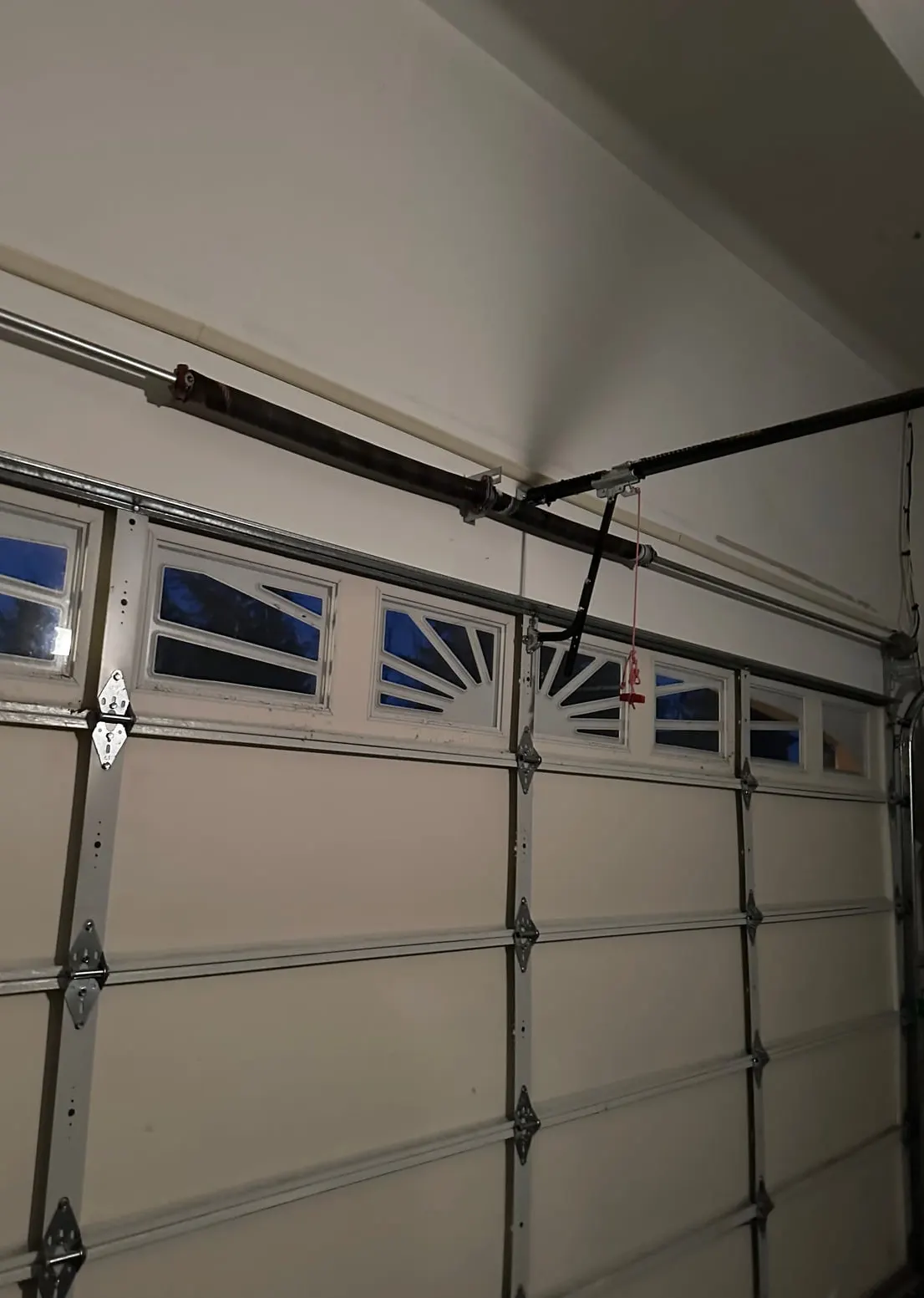
- Disconnect the opener. Pull the red manual release cord hanging from the trolley. You should hear or feel it disengage from the drive mechanism.
- Lift the door by hand. Raise it slowly to about waist height, roughly 3 to 4 feet off the ground.
- Let go and watch. A balanced door will hold its position on its own. An unbalanced door will either sink back down or continue rising.
- Test a second spot. Lower the door back down, then repeat the lift at a different height, such as fully open. Consistent holding at multiple points confirms a true balance, not a fluke.
- Reconnect the opener. Pull the release cord again (or follow your opener's reconnect procedure) and run the door through a full open-close cycle to make sure it's back on track.
Reading the Results
- Door stays put: Balance is good. No spring work needed right now.
- Door falls: Springs are too weak, often from age, corrosion, or metal fatigue.
- Door rises on its own: Springs are over-tensioned, which can happen after an incorrect prior adjustment or repair.
What You Can Do Yourself, and What You Shouldn't
The test itself is safe and something any homeowner can do with basic care. What comes next is not a DIY job. Torsion springs store enormous tension, enough to cause serious injury if adjusted without the right winding bars and technique. If your test shows an imbalance, the fix is spring adjustment or replacement, and that work belongs to a trained technician every time. The same goes for extension springs showing visible stretching, rust, or gaps between coils.
When to Call Lecanto Door & Opener
If your balance test shows the door falling, rising, or binding partway through its travel, it's time to call us. We handle Garage Door Spring Repair to restore correct tension safely, and our Garage Door Maintenance & Tune-Up service checks balance, hardware, and opener load together, which matters in a climate where humidity and heat cycles throw springs out of adjustment faster than in drier parts of the country. Catching an imbalance early protects your opener's motor and gears from months of unnecessary strain.
If your garage door in Lecanto, FL isn't holding its position, don't wait for the opener to fail first. Call Lecanto Door & Opener today and we'll get your door back in balance before it costs you a new motor.